AI & Retail: What the Data Actually Shows
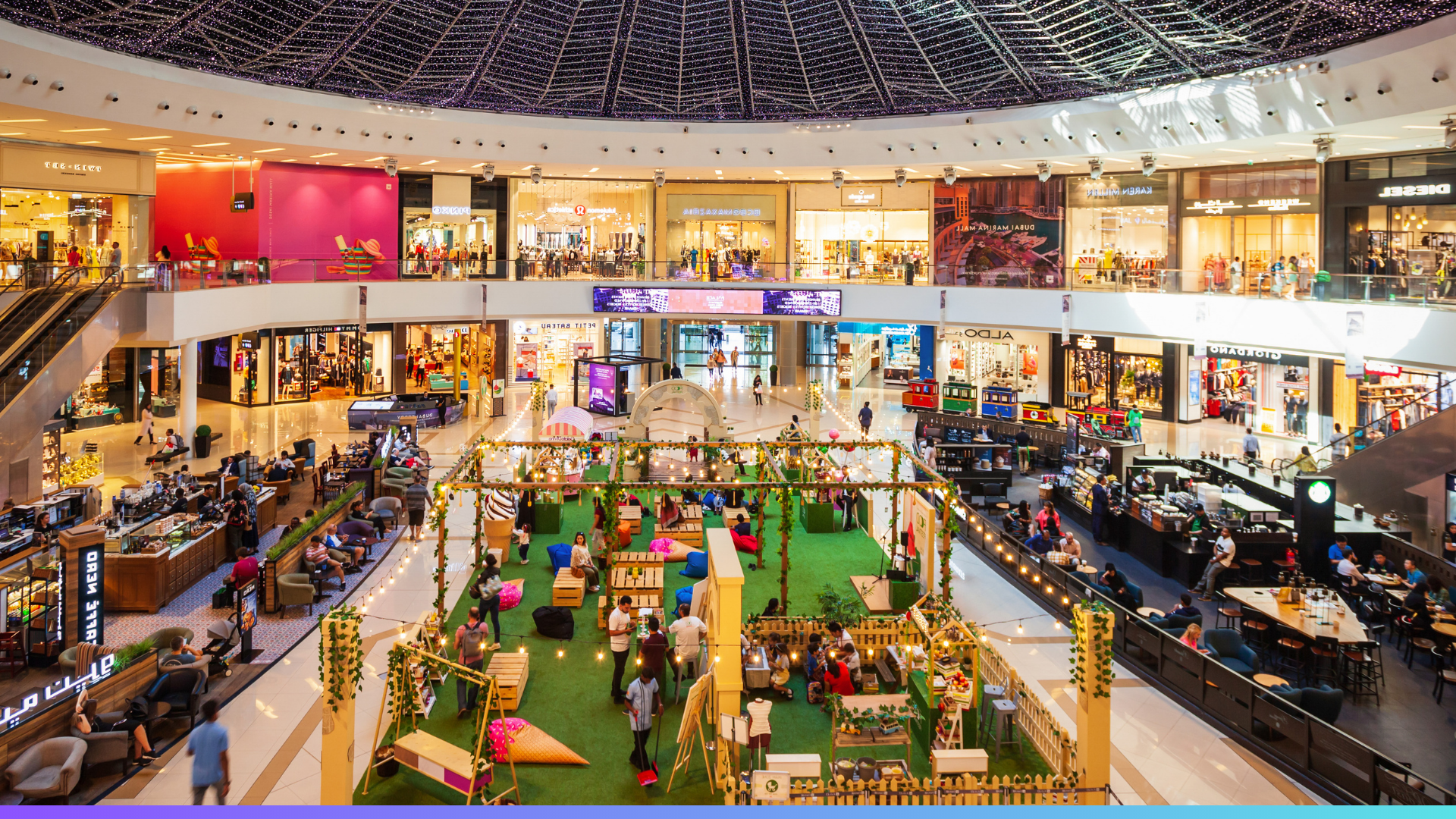
Artificial intelligence is being adopted across retail, but its impact on real estate fundamentals is still emerging and uneven. The current evidence does not support a single directional shift in store size, rent, or headcount. Instead, AI is contributing to incremental efficiency gains within existing models, while broader outcomes continue to be shaped by e-commerce penetration, consumer demand, and cost structures. The effect on retail real estate is therefore context-dependent, varying by retailer type, geography, and operating model.
Store Size Is Shifting, But Not Because of AI Alone
There is no consistent evidence that artificial intelligence is driving a change in store size. Retailers are actively deploying AI in demand forecasting, inventory optimization, and assortment planning, all of which contribute to tighter inventory control and faster turnover. In certain categories, particularly apparel and electronics, this has translated into more efficient use of space, especially in back-of-house storage.
But the primary drivers of store size decisions remain unchanged. E-commerce penetration continues to reshape how much physical space is required. Omnichannel strategies, particularly buy-online-pickup-in-store and returns processing, are redefining how stores function. Location economics and brand positioning still dictate whether a retailer prioritizes a flagship presence or a convenience footprint.
What is emerging is a bifurcated model. Retailers are opening smaller, highly efficient urban stores designed for speed and pickup, while maintaining or expanding larger experiential formats in high-visibility locations. In parallel, existing stores are being reconfigured to accommodate fulfillment and reverse logistics.
AI plays a role in enabling these shifts, but it is not the root cause. The data suggests that changes in square footage are far more closely tied to channel mix and consumer behavior than to AI adoption itself.
Rent Remains a Function of Performance, Not Technology
Retail rent is still governed by fundamentals: supply and demand, foot traffic, tenant credit quality, and overall market conditions. There is no evidence that AI, in isolation, is driving rent up or down across markets.
That said, AI is beginning to influence the variables that underpin rent. Improved inventory management and pricing strategies can increase sales per square foot. More sophisticated site selection tools can lead to better-performing locations. Dynamic pricing and promotion strategies can stabilize revenue and reduce volatility.
In strong locations, these incremental gains in tenant performance may, over time, support higher rents. But the relationship is indirect. AI enhances execution; it does not override market fundamentals. In weaker locations, where foot traffic is declining or demand is soft, AI does little to offset structural challenges.
At this stage, the impact of AI on rent is second-order. It is a performance amplifier, not a pricing mechanism.
Headcount Is Being Reallocated, Not Eliminated
Labor is where AI’s influence is most visible, but even here, the changes are more evolutionary than disruptive. Retailers are using AI to automate routine operational tasks such as inventory tracking, replenishment, and scheduling. Customer service is increasingly supported by chatbots and self-service tools, reducing the burden on frontline staff.
These efficiencies are real, particularly in back-office functions. But they are being offset by new operational demands. Stores are now fulfillment hubs. Order pickup, returns processing, and omnichannel coordination require labor. In-store experience, particularly in higher-end or experiential formats, still depends on human interaction.
What is happening is a reallocation of labor. Roles are shifting toward functions that support omnichannel operations and customer engagement, rather than being eliminated outright.
Labor market data reflects this. Hiring in retail continues, especially in logistics and fulfillment. Productivity is improving, but there is no evidence of large-scale workforce contraction driven by AI.
What This Means for Proptech
Artificial intelligence is not rewriting the economics of retail—it is quietly redefining how assets are operated, measured, and optimized.
The opportunity is not in predicting structural shifts in rent or square footage driven by AI alone. It’s in building infrastructure that operational improvements are captured and translated into measurable financial outcomes. Platforms that can connect tenant performance data, foot traffic analytics, lease structures, and asset-level financials will be best positioned to create value.
This is where the next phase of proptech innovation is emerging—not at the surface level of automation, but at the intersection of operations and capital. Investors and operators are increasingly looking for systems that move beyond insight and into execution, tools that can identify underperformance, quantify impact, and drive decisions in real time.
Retail is not being disrupted overnight. It is being recalibrated. And in that recalibration, the winners in proptech will be those who understand that AI is not the story itself. Instead, it’s the layer that makes the existing system more precise, more accountable, and ultimately more investable.