The Financialization of Home Renovation: Why a New Financing Layer Is Reshaping Real Estate
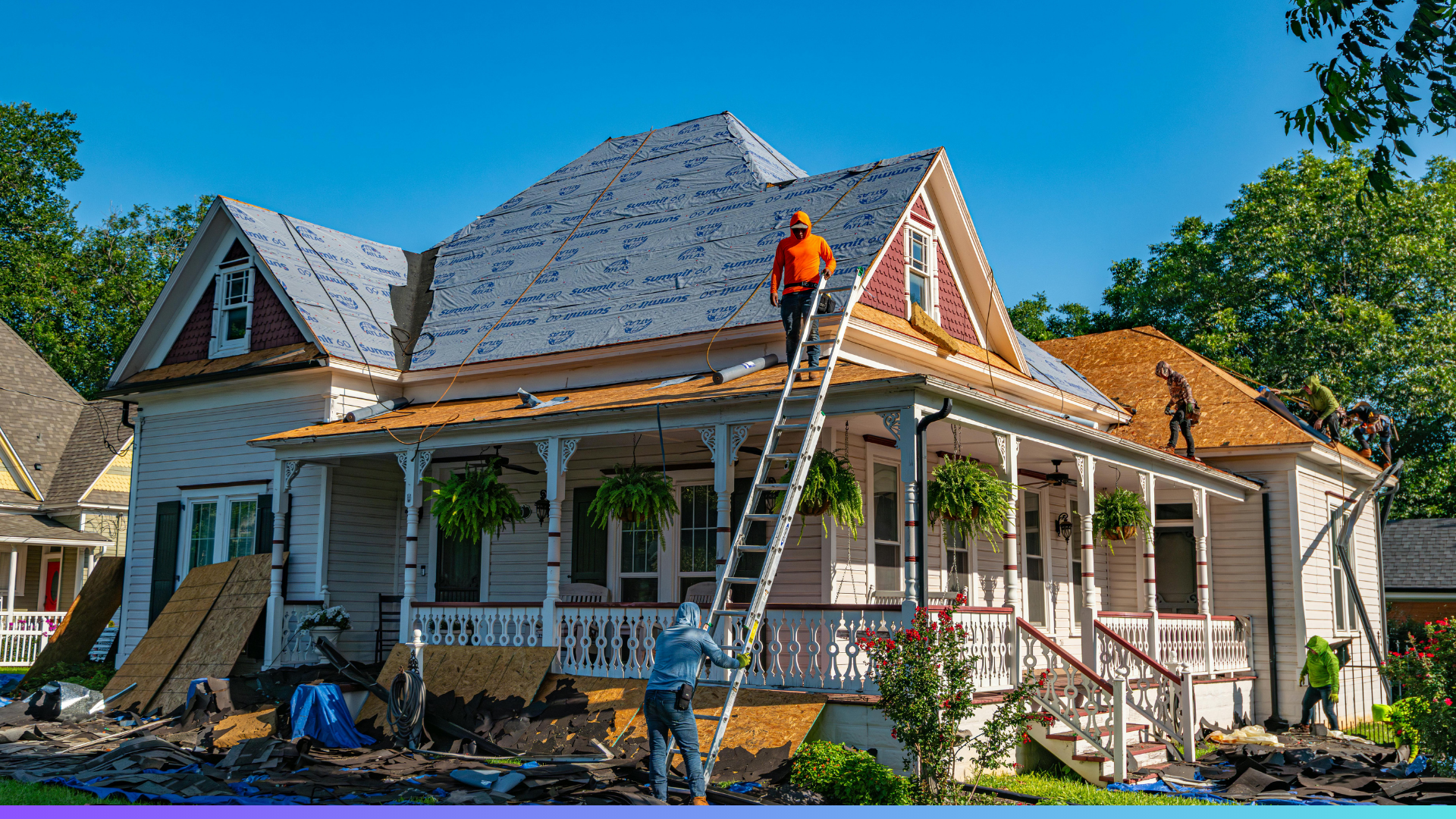
A structural shift is underway in residential real estate. As transaction activity slows and homeowners remain locked into low-rate mortgages, capital is migrating away from home purchases and into home improvement.
This shift is giving rise to a new category: a financing layer purpose-built for renovation and home equity deployment. Companies such as RenoFi, alongside Service Finance Company and Breakout Capital, are early indicators of this transformation.
The emergence of this category is driven by three macroeconomic forces:
The mortgage rate lock-in effect, which suppresses housing turnover
The accumulation of record levels of home equity that remain largely illiquid
Rising construction costs and complexity, which increase the need for structured capital
Taken together, these forces are reshaping how value is created in residential real estate. The home is evolving from a transactional asset into a continuous capital deployment platform, and renovation is becoming a primary mechanism for value creation.
1. A Structural Break in Housing Mobility
The U.S. housing market is experiencing a sustained decline in mobility. The primary driver is the divergence between existing mortgage rates and prevailing market rates.
Homeowners who refinanced between 2020 and 2022 secured mortgage rates at historic lows. As rates increased, the economic penalty for moving became substantial. Replacing a sub-3 percent mortgage with one exceeding 6 to 7 percent materially increases monthly housing costs, even when purchasing a comparable property.
This dynamic has produced a measurable lock-in effect:
Housing inventory remains constrained
Transaction volumes have declined relative to historical norms
Time horizons for homeownership have extended
In prior cycles, homeowners relied on transactions to realize value, whether through appreciation or relocation. In the current environment, that mechanism is impaired.
As a result, value creation is shifting inward, from the market to the asset itself.
2. The Rise of Illiquid Equity
Parallel to declining mobility is the accumulation of substantial home equity. Price appreciation over the past decade, combined with amortization of existing mortgages, has created significant embedded value across the housing stock.
However, this equity is not easily accessible.
Traditional financial products present limitations:
Cash-out refinancing is economically unattractive in a high-rate environment
Home equity lines of credit are often constrained by conservative underwriting and variable-rate exposure
Construction financing remains fragmented and operationally complex
This creates a structural inefficiency: homeowners possess considerable balance sheet strength but lack efficient mechanisms to deploy that capital into improvements.
The result is a growing demand for financial products that can:
Unlock equity without disrupting existing mortgage structures
Align capital deployment with renovation timelines
Underwrite based on future asset value rather than current condition
This demand underpins the emergence of a specialized financing layer.
3. Increasing Complexity in Renovation Economics
The economics of home improvement have also evolved.
Renovation projects now involve:
Higher labor costs due to skilled labor shortages
Increased material price volatility
Greater regulatory and permitting complexity in many markets
These factors increase both the cost and uncertainty associated with renovation.
At the same time, the scale of investment has grown. Larger projects, such as additions, structural upgrades, and energy retrofits, require significant upfront capital.
This combination of higher costs and greater complexity has two effects:
It increases the need for structured, reliable financing
It elevates the importance of accurate project underwriting and cost management
Traditional financing products, which are not designed for phased, project-based capital deployment, are poorly suited to this environment.
4. Emergence of a Dedicated Financing Layer
In response to these conditions, a new category of financial infrastructure is emerging.
RenoFi exemplifies a forward-looking underwriting model. By lending against after-renovation value, rather than current home value, it enables homeowners to access greater capital aligned with the expected outcome of a project.
Other participants in the ecosystem address adjacent components of the workflow. Service Finance Company embeds financing directly at the point of contractor engagement, facilitating immediate access to capital. Breakout Capital supports the broader contractor and project ecosystem through flexible financing solutions.
While these companies differ in execution, they share a common strategic position: they sit between homeowner intent and project execution, providing the capital required to initiate and complete renovation.
This positioning is critical. It places the financing layer at the center of a high-intent, high-value decision process.
5. From Lending Product to Embedded Infrastructure
The long-term significance of this category lies not in individual loan products, but in its potential to become embedded infrastructure within the renovation ecosystem.
Three structural shifts are already visible.
Integration with Workflow
Financing is increasingly integrated into the renovation process itself, rather than treated as a separate step. This includes alignment with:
Contractor networks
Project scoping and cost estimation
Disbursement schedules tied to project milestones
Alignment with Value Creation
Underwriting models are evolving to reflect future value rather than static collateral. This aligns the interests of lenders and homeowners around the successful execution of the project.
Data and Standardization
As financing becomes more structured, it introduces standardization into a historically fragmented market. This creates opportunities for data aggregation, performance benchmarking, and risk modeling at scale.
Over time, these dynamics position the financing layer not as a peripheral service, but as a core component of the renovation stack.
6. Implications for Real Estate Value Creation
The emergence of a renovation financing layer has broader implications for the real estate industry.
Shift from Transaction to Operations
Value creation is moving away from discrete transactions and toward continuous asset optimization. Renovation becomes a primary mechanism for enhancing asset performance.
Expansion of the Real Estate Technology Stack
Technology is extending beyond transaction enablement into asset-level workflows, including financing, construction, and operations.
Repricing of Capital Allocation Decisions
Homeowners are increasingly making capital allocation decisions similar to institutional investors, weighing the return on renovation against alternative uses of capital.
Institutionalization of a Fragmented Market
A historically informal and fragmented segment of the market is becoming more structured, financed, and integrated.
7. Outlook: A Durable Category
The durability of this category is supported by structural, rather than cyclical, factors.
The lock-in effect is likely to persist as long as there is a meaningful gap between existing and current mortgage rates. Home equity levels remain elevated, and demographic trends, including aging housing stock, will continue to drive renovation demand.
At the same time, technological advances in underwriting, data analytics, and workflow integration will improve the efficiency and scalability of financing solutions.
As a result, the financing layer for home improvement is positioned to become a permanent feature of the real estate landscape.
What this Means for Homeowners
The emergence of companies such as RenoFi signals a broader transformation in how value is created in residential real estate.
When homeowners are constrained from transacting, they turn inward, investing in the assets they already own. Capital follows this behavior, giving rise to new financial infrastructure designed to support renovation.
This is not simply an evolution of lending products. It is the formation of a new layer within the real estate stack, one that aligns capital with continuous asset improvement rather than discrete transactions.
In this environment, renovation is no longer a secondary consideration. It is becoming a central driver of value creation, supported by a financing ecosystem that is increasingly sophisticated, integrated, and institutionalized.