
Multifamily has spent decades investing in technology to improve property operations. Property management systems centralize accounting, leasing platforms manage prospect activity, and specialized software supports everything from maintenance to revenue management. Yet beneath this increasingly sophisticated technology infrastructure, much of the work required to operate a portfolio still depends on people manually transferring information, reconciling records, reviewing invoices, and coordinating tasks across disconnected systems.
For institutional owners and operators, this creates a structural challenge. Operating expenses continue to pressure property performance, while administrative workloads increase as portfolios grow. Technology has made information more accessible, but it has not necessarily reduced the amount of work required to act on it. The result is an industry with more software than ever, yet still heavily dependent on manual processes to maintain financial accuracy and operational consistency.
This case study examines the emergence of autonomous back-office operations through Unitbase, an AI-native platform that builds and deploys AI agents to manage core workflows for real estate operators. Founded by Arthur Jacobs and Aditya Kotak, Unitbase is moving beyond traditional process automation toward systems capable of executing work across existing software, documents, and communications. More broadly, the company represents a shift in multifamily technology from software that helps employees complete tasks to intelligent systems that increasingly perform the work themselves.
The Hidden Cost of Operating Complexity
Institutional multifamily portfolios have become increasingly complex organizations. A single property may process hundreds of invoices, maintenance transactions, vendor communications, resident payments, and accounting entries each month. Across thousands of units, those activities create significant administrative workloads, much of which remains distributed among on-site teams, regional managers, and corporate accounting departments.
Despite investments in centralization, individual properties frequently operate with different procedures. An on-site manager may enter vendor invoices manually, apply general ledger codes based on personal experience, and forward exceptions to corporate accounting. When mistakes appear during month-end reporting, accounting teams must revisit transactions, correct classifications, and reconcile information across banking and property management systems.
Those inconsistencies introduce costs beyond the time required to complete individual tasks. Incorrect expense classifications can obscure property-level performance, delayed invoices can generate fees, and fragmented purchasing practices make it difficult to compare costs across assets. More importantly, operators may lack the visibility required to distinguish unavoidable expenses from spending that could have been prevented.
The financial implications become significant at portfolio scale. At a 5% capitalization rate, every recurring dollar of operating expense eliminated can theoretically contribute approximately $20 to property value, assuming the savings flow through to NOI and capitalization rates remain unchanged. For institutional operators, administrative efficiency is therefore not simply a staffing consideration; it can influence asset performance, underwriting, and investment returns.
When Software Automates Tasks, Not Work
Traditional property technology has generally been designed around individual functions. Accounts payable platforms digitize invoices, accounting systems organize transactions, and workflow tools help employees route approvals and monitor outstanding tasks. Each can reduce friction within a particular process, but the responsibility for completing the work often remains with employees.
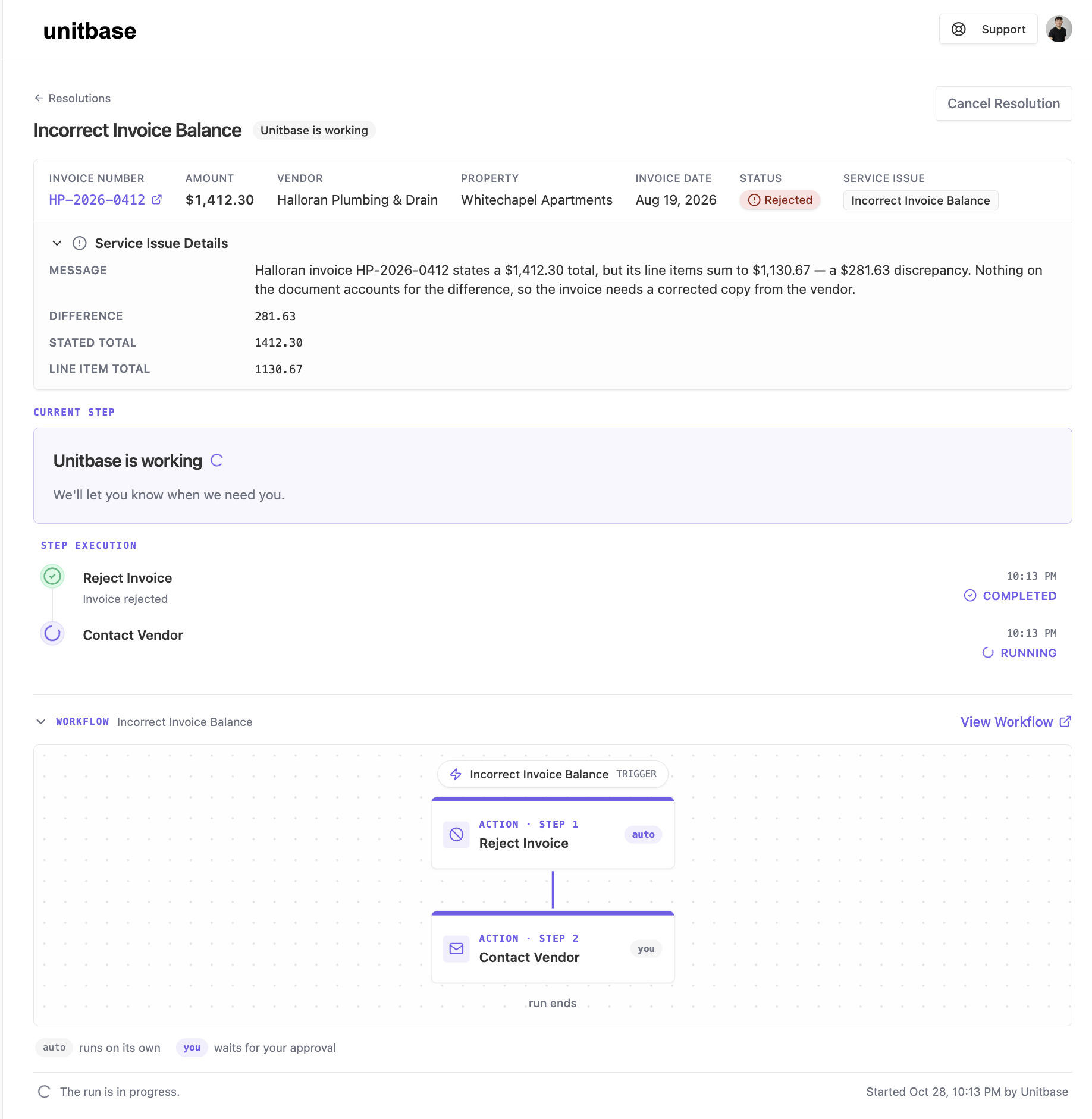
Consider an invoice submitted by a maintenance vendor. Software may extract the vendor name, amount, and description, but someone still needs to verify the contract, determine the correct accounting treatment, investigate discrepancies, request missing information, and approve payment. Automating data entry addresses only one component of a much larger workflow.
As portfolios grow, operators often respond by adding employees, expanding centralized accounting teams, or outsourcing administrative functions. These approaches provide capacity but do not necessarily improve the underlying process. When different properties follow inconsistent procedures, adding more people can expand the volume of work without correcting the systems that created it.
The challenge is particularly acute when experienced employees leave. Much of a property's institutional knowledge exists in personal spreadsheets, informal procedures, email histories, and the memories of individual team members. Replacing an employee can therefore require more than hiring someone new; it can involve reconstructing how the property actually operates.
The Unitbase Story

Arthur Jacobs and Aditya Kotak founded Unitbase in 2024 after spending years developing financial technology for renters and landlords. Both were early product leaders at Flex, where they helped scale a major rent payment network and worked closely with some of the country's largest property operators. Their experience exposed a persistent contradiction: real estate companies were investing heavily in technology while continuing to rely on fragmented systems and manual coordination to execute fundamental operating processes.
Before Flex, Jacobs worked in venture and growth equity investing at Goldman Sachs, while Kotak worked as a quantitative analyst at the firm. Their backgrounds combined financial analysis, software development, and direct exposure to the operational infrastructure of large real estate portfolios. Rather than building another application for property teams to learn, they founded Unitbase around the idea that AI could operate within the systems companies already use.
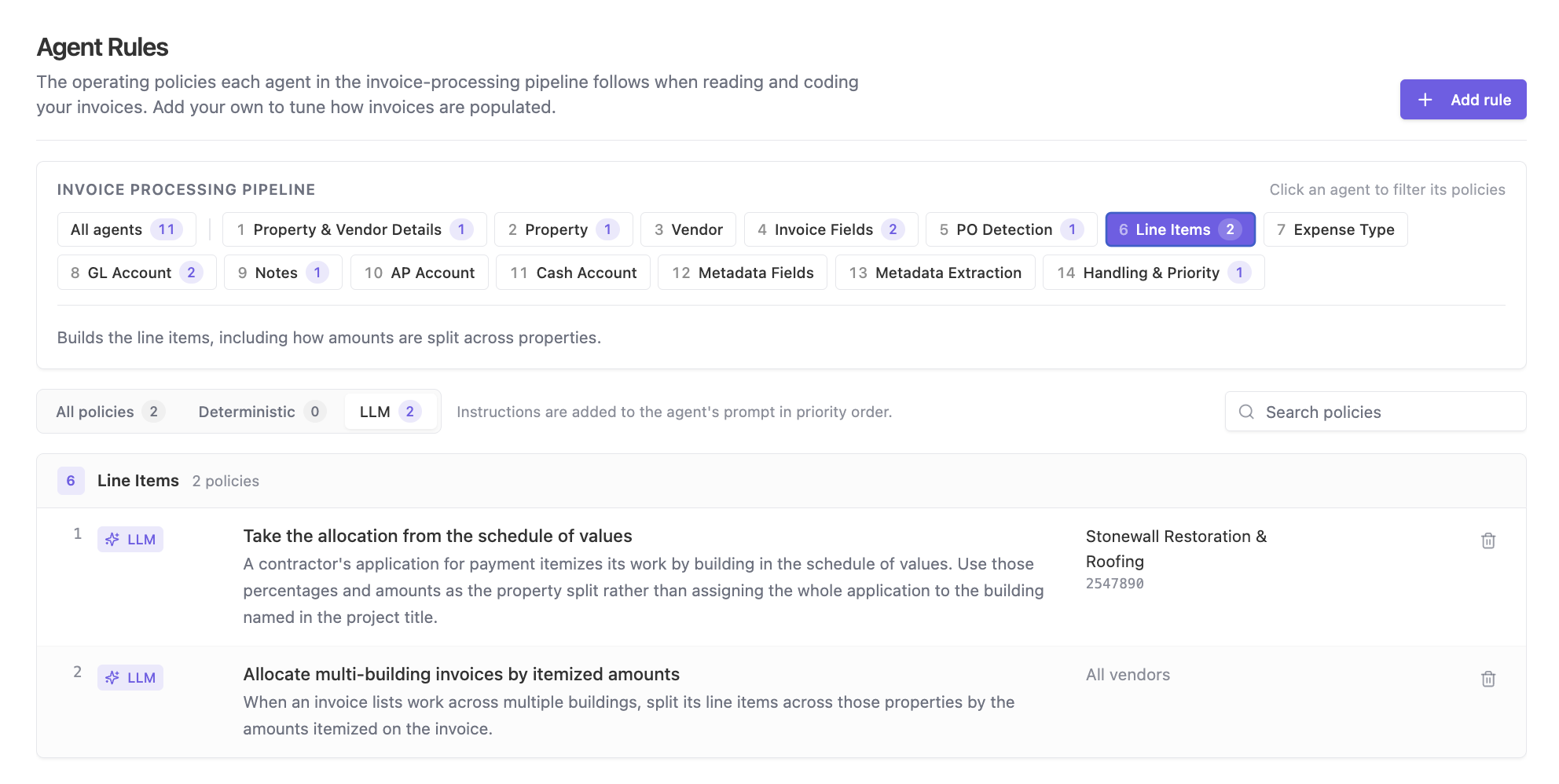
The company's approach begins with understanding how an operator actually works. Unitbase maps existing processes, identifies operational and financial objectives, and deploys AI agents designed to execute those workflows. Some customers use the company's managed agents, while others engage Unitbase to build systems they can host and control within their own infrastructure.
That flexibility reflects a broader distinction between conventional software and agentic operations. Instead of requiring every operator to adopt a standardized interface and workflow, Unitbase attempts to adapt the technology to the operating procedures, policies, and systems already in place.
From Process Automation to Autonomous Execution
Recent developments in artificial intelligence have expanded the range of administrative tasks that software can perform. Large language models can interpret invoices, contracts, spreadsheets, and email correspondence, while AI agents can coordinate multiple steps across different systems. Tasks that previously required employees to move between applications can increasingly be executed within a continuous automated workflow.
Unitbase applies those capabilities to the operational processes that consume substantial time across multifamily portfolios. Its accounts payable agent, for example, receives invoices through email, extracts information, applies general ledger classifications, checks for duplicate charges or off-contract pricing, and prepares transactions for approval. The employee remains responsible for authorization, but much of the administrative work preceding that decision is handled by the system.
The distinction extends beyond efficiency. Because an agent can apply the same policy consistently across thousands of transactions, it creates an opportunity to standardize operating procedures across properties. Rules that previously depended on individual knowledge can become centrally defined processes executed throughout the organization.
The system also incorporates human review and accountability. Employees approve transactions, agents learn from corrections, and actions are logged alongside the individuals responsible for authorization. This approach allows operators to introduce automation without immediately removing oversight from financially consequential workflows.
When Every Invoice Becomes an Audit
One of the more significant implications of agentic operations is the ability to examine transactions at a level that would be impractical through manual review. Large portfolios process enormous volumes of invoices, but finance teams generally cannot evaluate every line against contracts, historical purchasing patterns, market benchmarks, and alternative vendors. Instead, audits are often periodic, targeted, or conducted after expenses have already been incurred.
Unitbase approaches accounts payable as both an administrative workflow and a source of operating intelligence. Its agents review invoice details, identify potential overcharges, flag avoidable fees, and compare purchasing patterns across vendors and properties. Rather than treating invoice processing as the final step in a transaction, the platform uses it to continuously examine how a portfolio spends money.
This creates a different relationship between accounting and asset management. Traditional accounts payable systems primarily record expenses and support payment processing. An intelligent accounts payable layer can begin asking whether the expense was appropriate, whether it complied with the contract, and whether the same product or service could have been purchased at a lower cost.
At institutional scale, that distinction can become financially meaningful. Spending patterns that appear ordinary at an individual property may reveal significant inconsistencies when compared across hundreds of communities. The value is not simply processing invoices faster, but converting routine financial transactions into opportunities to improve operating performance.
The Economics of Portfolio-Wide Intelligence
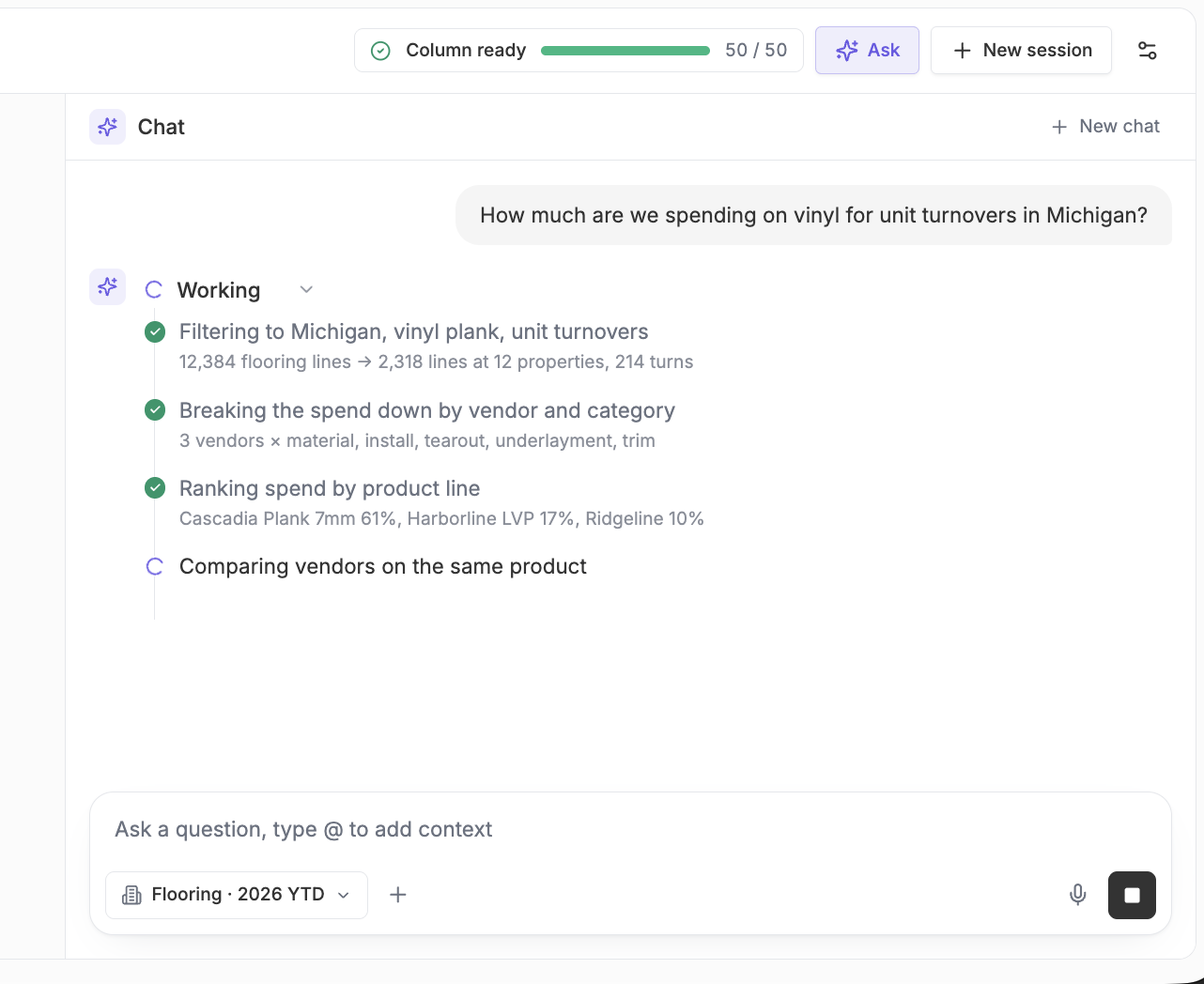
One of Unitbase's customer engagements illustrates how fragmented purchasing information can obscure meaningful savings. An owner-operator managing approximately 80,000 units was spending eight figures annually on flooring across more than 40 vendors. Invoices were recorded with limited detail, making it difficult to compare actual product costs or identify purchasing inconsistencies across the portfolio.
Unitbase analyzed flooring transactions across 167 properties, standardized the underlying purchasing information, and benchmarked spending across vendors and product lines. The analysis identified approximately $30 in potential savings per invoice, equivalent to about 3% of category spending. Much of the opportunity came from using lower-priced vendors already operating in the same regions and selecting comparable products that met the operator's specifications.
The significance is the analytical process rather than the individual dollar amount. Purchasing decisions were being made across numerous properties, but the organization lacked a consistent method to compare costs across the portfolio. Once that information was standardized, the operator could identify actionable savings without necessarily changing the quality or scope of the products being purchased.
For institutional owners, this illustrates an emerging application of AI beyond administrative productivity. If routine operating transactions can be evaluated continuously, centralized purchasing intelligence becomes possible across expense categories that have historically been difficult to monitor in detail. The same analytical approach could extend to maintenance materials, appliances, recurring vendor contracts, and other controllable operating expenses.
Standardizing the Back Office
A second Unitbase engagement demonstrates the operational impact of automating a process across multiple properties. A 10,000-unit operator was spending as much as ten minutes manually entering and coding individual invoices. Different properties applied inconsistent general ledger classifications, creating additional work for corporate accounting teams and contributing to delayed payments and vendor frustration.
Unitbase introduced a centralized invoice intake process supported by agents capable of extracting information and applying the operator's detailed accounting rules. Those rules included cash account requirements, property-specific classifications, and expenses requiring allocation across multiple properties. The system allowed invoices to be processed consistently without requiring employees to manually reconstruct the same accounting decisions.
According to Unitbase, employees were operational after approximately 30 minutes of training, and the organization became comfortable with a full portfolio deployment of roughly 5,000 monthly invoices within the first month. The operator's CFO described the implementation as "one of the most successful rollouts we've done this year." The reported experience suggests that automation designed around familiar workflows can reduce some of the adoption challenges associated with introducing new property technology.
Across its customer base, Unitbase reports invoice-processing time reductions exceeding 90%, a doubling of accounts payable clerk capacity, and significant improvements in month-end close times. These results are company-reported and may vary by operator, but they indicate the potential for agentic systems to affect both labor productivity and financial reporting efficiency.
From Labor Efficiency to Operating Leverage
The first economic argument for back-office automation is straightforward: reducing the time employees spend on repetitive administrative work. But the longer-term implications extend beyond processing costs. Standardized workflows can reduce the dependence of operating performance on individual employees while allowing existing teams to spend more time evaluating expenses, budgets, and financial exceptions.
That distinction matters because personnel changes can introduce operational disruption. When critical procedures exist primarily in employees' memories, turnover creates risks involving vendor relationships, payment schedules, accounting practices, and unresolved transactions. Codifying those procedures inside continuously operating systems may reduce the amount of institutional knowledge lost when employees leave.
The resulting shift could also change how operators structure their organizations. Instead of scaling administrative headcount proportionally with portfolio growth, companies may increasingly expand processing capacity through software. Employees would remain responsible for oversight, judgment, vendor relationships, and decisions requiring contextual understanding, while agents execute more of the repetitive work.
The financial benefits would depend on how operators translate that capacity into measurable outcomes. Time savings alone do not necessarily produce NOI improvement unless they reduce costs, support additional operating scale, prevent financial leakage, or improve decisions. The strongest business case for agentic operations therefore combines productivity gains with demonstrable changes in expense control and portfolio performance.
The AI-Native Operating Model
Unitbase's vision extends beyond accounts payable and accounting. The company anticipates a model in which operators establish centralized policies for core workflows and AI agents execute those procedures consistently across every property. Administrative functions such as reconciliations, variance reporting, and vendor coordination could increasingly operate through systems capable of handling exceptions, interacting with existing software, and escalating decisions when human judgment is required.
The implications for organizational design are substantial. Property management companies have historically scaled by combining software, centralized services, and additional employees. An AI-native operator could increasingly scale by expanding a system of standardized processes, with employees managing exceptions and concentrating on the activities that most directly influence property performance.
That architecture could eventually extend into maintenance, leasing, and resident support. These functions also depend on information moving between documents, communication channels, employees, and systems of record. The opportunity is to create an operational infrastructure in which work can move across those environments without requiring repeated manual intervention at each step.
Unitbase has raised a $4.8 million seed round led by Zigg Capital, and its customers collectively oversee more than 100,000 apartment units. The company remains early in its development, but its adoption among larger operators provides a view into how institutional multifamily organizations are beginning to evaluate AI as an operating capability rather than simply another software category.
The Future of Multifamily Operations
Over the next five years, multifamily operators are likely to face a more consequential technology question than which AI applications to purchase. They will need to determine which operating processes should remain dependent on employees, which can be executed by intelligent systems, and how accountability should function when work moves across human and automated teams.
The most significant opportunity may emerge from combining execution with intelligence. An agent that processes invoices can reduce administrative labor, but an agent that also audits contracts, identifies overpayment, benchmarks vendors, and continuously monitors spending can influence the underlying economics of the portfolio. The distinction separates task automation from a more fundamental redesign of operating performance.
Adoption will require greater discipline than simply deploying new technology. Operators must define workflows, establish approval policies, maintain reliable access to systems and data, and measure outcomes against operating costs and financial performance. AI systems that automate inconsistent processes may simply execute those inconsistencies faster, making process design and governance essential components of implementation.
Unitbase represents a broader shift in real estate technology toward systems that perform operational work rather than merely organize it. For owners and operators, the opportunity is not another dashboard or an additional application. It is an operating infrastructure capable of executing standardized processes, retaining institutional knowledge, and identifying financial opportunities across the portfolio.
The next generation of high-performing multifamily operators may not be defined by how many properties each employee can manage. It may be defined by how much of the portfolio's operating complexity no longer requires manual management.